All photos in this post were taken by me, Verónica H. Brown.
In my last blog post, I complained about my lack of garden insects. A few days later, the insects returned….. in droves! Bumblebees, European honeybees, yellow jackets, great golden digger wasps, monarch butterflies, and a bunch of other insects whose names I don’t yet know (but I have a book, and I’m studying!) One morning, I counted about 25 bumblebees on my patch of Partridge pea (Chamaecrista fasciculata) alone!
Like the bugs, I have been very busy….. planting lots of plugs to fill bare spots in my garden beds, preparing for my September bird talk at Whelden Memorial Library, and getting ready for my first Native Plant Sale at the Harwich Farmers Market. A few of the species for sale—most of which are first-year babies—are blooming right now, about to bloom, or already have seed pods! If you can’t make it to the sale, visit my online shop, place your order and set up a time to pick up your plants on the weekend (in South Dennis).
Today, I want to share a list of the five busiest native plants in my yard right now, in case you need some inspiration for what to plant next in yours!
1. Partridge Pea (Chamaecrista fasciculata)
- Size: 12-36” Height | 6-14” Width
- Conditions: Dry/Medium Soil | Full/Part Sun
This is the native plant version of instant gratification. It is an annual plant suitable for poor, dry-to-medium soils in part to full sun. It features beautiful yellow blooms that attract crowds of bumblebees, who use their awesome buzz pollination superpowers to collect pollen. This plant is special because the flower itself only contains pollen. The nectar is actually located at the base of most of the leaves in tiny cups called extrafloral nectaries. These glands attract a variety of insects, including ants, who act as bodyguards to defend the plant against herbivores.


This gorgeous native plant is super easy to grow. The seeds require only 10 days of cold, moist stratification (and scarification) before they germinate, meaning they can be started as late as mid-April. They bloom prolifically starting in July, and what a spectacular show they put on. Definitely give it a try next year!
2. Allegheny Monkey Flower (Mimulus ringens)
- Size: 12-36” Height | 6-12” Width
- Conditions: Medium/Wet Soil | Full/Part Sun
One of the many goals I’ve set for my small backyard habitat is to attract hummingbirds. However, many of the plants hummingbirds love to visit require growing conditions I just cannot provide—moist to wet soils in full sun. Well, enter Allegheny Monkey Flower, a native perennial that thrives in moist to wet soils in part sun. Those conditions, I COULD meet… in a pot, so last fall I planted a few of them in deck rail planter pots.


I will admit that I was skeptical of how this plant would perform, but around mid-July, I got my first bloom, and then it just exploded after that. So many flowers! And then…..magic! A female ruby-throated hummingbird appeared to drink nectar from it, followed soon by another. Before long, they were coming back day after day. It has been incredible and just so much fun to watch.


The plant is just about done flowering now, but the hummingbirds still stop by to check it out before they resolve to just visit the feeder next to it. The moral of this story? Yes, it’s true. It really does attract hummingbirds! And if you don’t have the right soil conditions, you can grow it just fine in a pot. If you want to see hummingbirds in your garden, this is a definite must-have!
3. White Turtlehead (Chelone glabra)
- Size: 18-30” Height | 12-24” Width
- Conditions: Medium/Wet Soil | Full/Part Sun
I cannot begin to tell you how much fun it is to stand by this plant and watch its interaction with bumblebees. It really should be a form of meditation. Like walking meditation, breathing meditation, but watching bumblebees meditation.
The lower lip of the white turtlehead flower is hairy and acts as a landing pad for floral visitors. The pollen-bearing anthers and stigma are on the upper lip. When nectar-seeking bumblebees acrobatically wiggle their way into the flower, the pollen gets stuck to their hairy thorax. Then, when they visit the next flower, some of that pollen is left behind. Et voilà! Pollination!


In the wild, this species only grows in moist soils, but in a garden setting, it can handle average soils as long as it doesn’t dry out. It does best in part to full sun. I have mine in a large pot so I can water it frequently, and it is happy as a clam—which it also kind of resembles, when I think of it. If you have a rain garden or want to set up a large planter with native plants, this species would look beautiful and thrive alongside the bright red Cardinal Flower (Lobelia cardinalis), the cool Blue Flag Iris (Iris versicolor), and the pink Rose Milkweed (Asclepias incarnata)—all of which attract numerous bees, butterflies, and even hummingbirds.
4. Brown-eyed Susan (Rudbeckia triloba)
- Size: 24-48” Height | 12-16” Width
- Conditions: Dry/Medium Soil | Full/Part Sun
This plant makes me smile every time I see it. For me, there is no better word to describe it than cheery. It’s like IT is happy, and it wants ME to be happy. It attracts all kinds of pollinators, birds, spiders, bunnies (which is why mine is fenced), and humans. Really. It is difficult to be mad, upset, worried, or feel blue when staring at the little, cheery yellow blooms of the Brown-eyed Susan.


This species is a near-native to us and native to New England and specifically ecoregion 84, so naturally, it loves it here, and provides lots of ecological value. Though its preference is average soil moisture, it can handle dry conditions and is drought-tolerant. It is easy to grow from seed, low-maintenance, fast-growing, and blooms for several weeks in the summer and early fall. Finches in particular love the seedheads of these and, of course, other Rudbeckia species like the native Rudbeckia hirta, which has bigger but fewer blooms. This biennial or short-lived perennial readily self-seeds, so if you leave the seedheads, you’ll have a fresh batch of baby plants near the mother plant every season. It’s great for filling in space in a small, homegrown meadow!
5. Coastal Plain Joe-Pye Weed (Eutrochium dubium)
- Size: 36-48” Height | 24-48” Width
- Conditions: Medium/Wet Soil | Full Sun
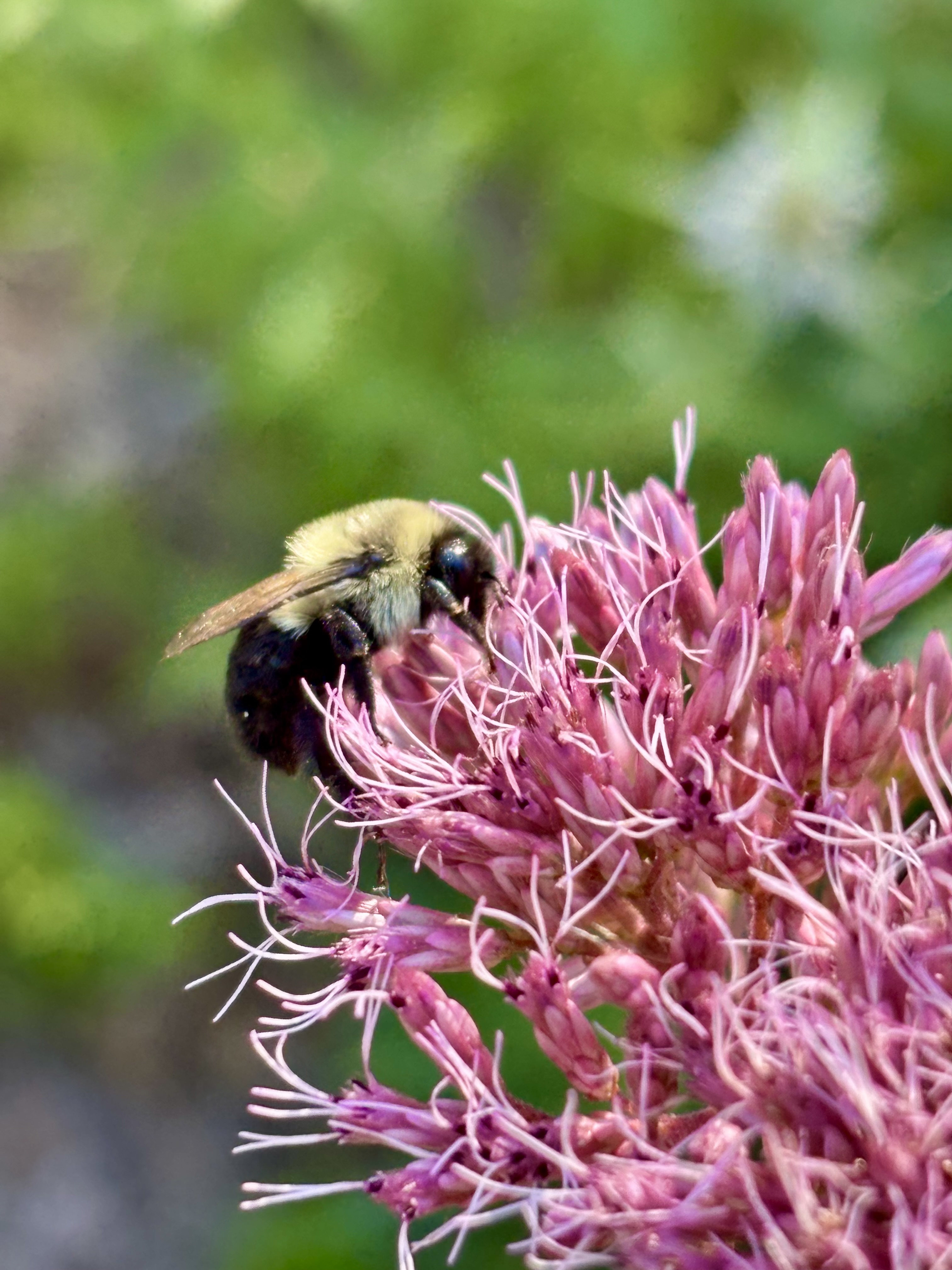
This late-blooming native plant thrives in moist to wet soils in full sun, and it’s the shortest of our native Joe-Pye weeds. As I’ve mentioned before, all I have is dry, sandy soil in my habitat, so this species happily lives in a large pot in my small sunny area (affectionately named Monarch Park because I planted lots of butterfly-attracting species there). This mid-summer bloomer has beautiful pink/mauve flowers that act as a wonderful nectar source for pollinators in late summer and fall. Once spent, the seedheads provide seeds for winter birds. It also supports native bees and butterflies at risk, including the half-black bumblebee (Bombus vagans). Joe-Pye weed species are a must for pollinator gardens!


Don’t have a lot of sun in your yard? Fear not. There are other Joe-Pye weed species that love basking in an area that only receives part-sun. For example, I also have Purple Joe-Pye Weed (Eutrochium purpureum), a near-native that is thriving in part sun (almost shade, honestly). It’s also not too fussy about the drier conditions in my yard, even though it prefers moist to wet soils. There’s also Hollow-stem Joe-Pye Weed (Eutrochium fistulosum), which prefers the soil to be a bit more on the wet side, as it usually grows in wetlands in the wild—perfect for a rain garden, perhaps. And last but not least, Spotted Joe-Pye Weed (Eutrochium maculatum), which gets its name from the purple spots often found on its stems – a tough near-native that can handle all soil conditions in full to part sun. This tall beauty is the quintessential meadow plant and, like its cousins, provides immense ecological benefits to the habitat. If you can make any of these Joe-Pye Weed species work, your pollinators will thank you.
The Best Time to Plant is NOW!
If you’re thinking, “Oh, summer is almost over… Maybe I’ll try some of these next year,” hang on! You don’t have to wait until next year (except for annuals). In fact, the best time to put plants in the ground is right now.
As summer winds down, we (hopefully) start getting more frequent rain and cooler temperatures. If you plant between now, late August, and mid-to-late October, your new plants will more easily settle into their new homes. Their roots will grow strong over the winter, and then next spring and summer they will be ready to greet you and your pollinators.
Where can you get native plants on or near the Cape? Well, I now have my micro nursery shop where you can buy some of my Cape Cod-grown native plants for pickup in South Dennis or check out local nurseries that will probably still have lots of native plants and maybe some good deals, too. Go check them out!
Happy native planting!
Leave a Reply