“I grew this from seed!”
My husband says this should be my catchphrase. I say it often. I say it proudly.
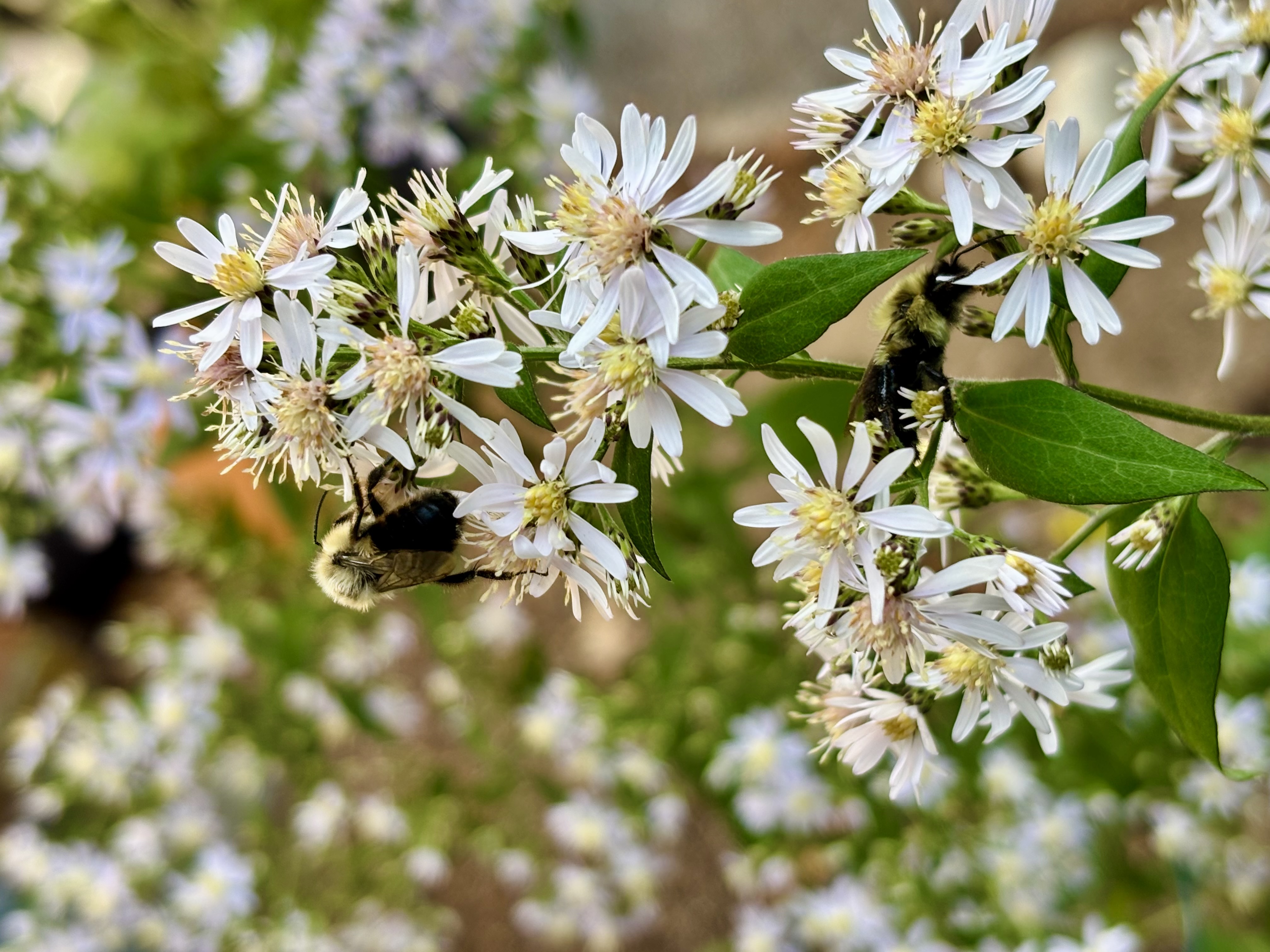
I last said it in early October, pointing to a beautiful 3-foot tall Symphyotrichum cordifolium (Blue Wood Aster ), one of the more than 150 plants I grew last winter through the Winter Sowing method.


Symphyotrichum cordifolium (Blue Wood Aster) winter sowed in late December 2024. Roots in June 2025 (left), starting to bloom mid-September 2025 (center & right).
Winter Sowing is an easy and inexpensive way to grow strong and healthy plants outdoors in winter. Very basically, you take an empty, clear plastic container (like a milk jug or a salad container), poke drainage holes on the top and bottom, fill it with 3-4” of potting soil, sow the seeds according to the packet instructions, seal it up, then put it outside in a place that receives morning sunlight and afternoon shade. This technique works especially well for native plants because many of their seeds require cold stratification (the process of subjecting seeds to a period of cold, moist conditions to break their dormancy and prepare them for germination). As an added bonus, seedlings started this way, unlike plants started indoors, are already hardened off by having been exposed to the elements throughout the winter and beginning of spring.

Another advantage of using this method is that you can grow plants that are difficult to find at your local nurseries. Last winter, I grew 25 different herbaceous perennial species, including four Milkweeds (Asclepias tuberosa, Asclepias verticillata, Asclepias incarnata, and Asclepias syriaca), one of which hosted Monarch caterpillars twice this summer; four Goldenrods (Solidago flexicaulis, Solidago nemoralis, Solidago speciosa, Solidago caesia), which are important keystone species; three of the Susans (Rudbeckia hirta, Rudbeckia triloba, and Rudbeckia fulgida), and several other powerhouse species like Wild Lupine (Lupinus perennis), Common Blue Violet (Viola sororia), and Spotted Bee Balm (Monarda punctata), as well as two annual species, Partridge Pea (Chamaecrista fasciculata), a bumblebee magnet, and Sweet everlasting (Pseudognaphalium obstussifolium), a host plant of the Painted Lady Butterfly.


All grown through Winter Sowing in 2025. Rudbeckia triloba (Brown-eyed Susan) in September 2025 (left), Pseudognaphalium obtussifolium (Sweet Everlasting) in August 2025 (center), and Solidago caesia (Blue-stemmed Goldenrod) in September 2025 (right).
Regarding native plants, the saying goes, “first they sleep, then they creep, then they leap,” so I was not expecting a lot of flowers this year aside from the annuals. However, I was pleasantly surprised that many of them not only bloomed, but bloomed for a long time, giving my pollinators a little extra nectar and pollen boost, especially at the end of the season. I’m excited to see the rest bloom for the first time next year and the year after that. My patience will be rewarded.
If you, like me, are eager to create or improve habitat around you, you need native plants –and lots of them. Winter Sowing can help you get there quicker. It’s not only easy and low-cost, it is a fun and exciting way to engage with your garden in the off-season. I cannot recommend it enough.
If you would like to jump on the Winter Sowing wagon, I have a few tips and tools you might find useful:
- Winter Sowing Instructions 2025 – where I’ve written detailed, illustrated instructions on how to set up your containers.
- If you’d like to watch a tutorial, I highly recommend GrowIt BuildIt’s How to Winter Sow Seeds – A Complete Tutorial Guide.
- Winter Sowing Tracking Sheet – to keep track of what species you’re putting in each container. It comes in handy when the seedlings start coming up in the spring.
Where to Get Seeds
- Northeast Seed Collective – start here if possible because they have the only catalog of seeds that are local ecotype to ecoregion (84). More on this coming soon, but trust me, it’s better to get the seeds from them if you can.
- Wild Seed Project – this is the best second option because Maine, though not technically in our ecoregion, is still pretty close to us on the Cape.
- Prairie Moon Nursery – this is a BIG company with a huge production of seeds. They are in the Midwest, so it’s not ideal, but the only option for many seed species that you just cannot find anywhere else.
What Species to Sow
A good place to start is to think about what kind of growing conditions you have and go from there. Is your garden bed sunny, sandy and dry? Do you have a ton of shade? Will you be growing plants in pots? With that information in mind, you can find inspiration for species to grow by visiting/checking out:
- My Cape Cod Natives Blooming Calendar – a list of common plants native to Cape Cod including growing conditions and blooming times.
- CapeCodNativePlants.org – a database managed by the Association to Preserve Cape Cod listing mostly native and near-native plants.
- Native Plant Trust Garden Plant Finder – where you can sort by all kind of parameters like color, height, blooming season, etc. Don’t forget to select for eco-region (84) – Atlantic Coastal Pine Barrens to get a list of the native plants that will do best on Cape Cod and will provide the most benefit to local insects and wildlife.
If you need help figuring out what to get, feel free to contact me and I would be happy to give you suggestions or help you figure out some species to try. I also run the Native Plants Gardening Club at South Dennis Library on the second and last Tuesday of the month at 9:15 am. Everyone is welcome.
*A portion of this blog post was first written as an article for the Massachusetts Pollinator Network’s December 2025/January 2026 Newsletter.
Leave a Reply